Introit
Collect
O God, who in the abasement of your Son
have raised up a fallen world,
fill your faithful with holy joy,
for on those you have rescued from slavery to sin
you bestow eternal gladness.
Through our Lord Jesus Christ, your Son,
who lives and reigns with you in the unity of the Holy Spirit,
one God, for ever and ever. Amen.
First Reading (Zechariah. 9:9-10)
Rejoice greatly, O daughter Zion! Shout aloud, O daughter Jerusalem! Lo, your king comes to you; triumphant and victorious is he, humble and riding on a donkey, on a colt, the foal of a donkey. 10 He will cut off the chariot from Ephraim and the war horse from Jerusalem; and the warrior’s bow shall be cut off, and he shall command peace to the nations; his dominion shall be from sea to sea, and from the River to the ends of the earth.
Responsorial Psalm (145:1-2,8-9,10-11,13-14)
R/. I will praise your name for ever, my king and my God.
Second Reading (Romans 8:9,11-13)
My sisters and brothers, 9 you are not in the flesh; you are in the Spirit, since the Spirit of God dwells in you. Anyone who does not have the Spirit of Christ does not belong to him. 11 If the Spirit of God who raised Jesus from the dead dwells in you, he who raised Christ from the dead will give life to your mortal bodies also through his Spirit that dwells in you. 12 So then, brothers and sisters, we are debtors, not to the flesh, to live according to the flesh. 13 For if you live according to the flesh, you will die; but if by the Spirit you put to death the deeds of the body, you will live.
Verse Before the Gospel
Gospel (Matthew 11:25-20)
At that time Jesus said, “I thank you, Father, Lord of heaven and earth, because you have hidden these things from the wise and the intelligent and have revealed them to infants; 26 yes, Father, for such was your gracious will.” Then, turning to his disciples, Jesus said: 27 “All things have been handed over to me by my Father; and no one knows the Son except the Father, and no one knows the Father except the Son and anyone to whom the Son chooses to reveal him. 28 “Come to me, all you that are weary and are carrying heavy burdens, and I will give you rest. 29 Take my yoke upon you, and learn from me; for I am gentle and humble in heart, and you will find rest for your souls. 30 For my yoke is easy, and my burden is light.”
Catena Nova
Compassionately I bend down very low in order to raise it up.… I do not make a show of words; I have left you the proof of my deeds. You can see that I am gentle and humble in heart from what I have become. Consider my nature, reflect upon my dignity, and marvel at the condescension I have shown you. Think of where I came from, and of where I am as I speak to you. Heaven is my throne, yet I talk to you standing on the earth! I am glorified on high, but because I am long-suffering. I am not angry with you, “for I am gentle and humble in heart.” (St. John Chrysostom)
Homily
I received an irate phone call a couple of weeks ago. From an ex-Catholic who left the Church largely because of its treatment of women, and in particular, its teaching on ordination. She has a graduate degree in theology so her objections are not merely knee-jerk or without thought. Despite her distance, she keeps up with church news. (I sometimes think she protests too much). Her latest outrage had to do with the consecration of the United States to the Sacred Heart of Jesus by the American bishops on June 11. In her view, this violated the separation of church and state.
Another online critic with a similar opinion put it this way: "I really do not understand the notion of "consecrating" an entity. I can understand the concept of one consecrating their own life to the Lord, to follow in His footsteps, with regard to service and prayer life. But, how can one consecrate another person, if that person has a free will? When it comes to a nation, it gets even more ambiguous. The U.S. is a mosaic of believers in various faiths and non-believers too. While I am a Christian and like the objective, I could see the other side. Were a Hindu to consecrate my country to one of their gods, I would not appreciate that at all."
I must confess I'm not entirely unsympathetic. And not about the Sacred Heart. For on June 26, the president's Religious Liberty Commission delivered a 14-page final draft in the Oval Office which recommends, among other things, altering the notion of a "wall of separation" between church and state to "building bridges" between the two. A summary can be found at https://www.justice.gov/religious-liberty-commission/media/1450071/dl?inline. It's headed by a quote from the president: “We’re bringing back religion in our country, and we’re bringing it back quickly and strongly—because for America to be a great nation, we must always be one nation under God.”
Of course, those who, like my friend, are concerned about such things, might well ask, "Whose religion?" And "Whose God?" The worry — legitimate in my opinion — is this is all a cover for Christian nationalism, and indeed, a peculiar version of the Christian faith: one not always friendly, by the way, to Catholics. Some even think we're witnessing a resurgence of the anti-Catholic (read: anti-immigrant) views of the No-Nothings of the 19th Century. The recent tensions between government officials, even Catholic ones, over Pope Leo's objections to the Iran war heighten such worries. President Lincoln himself put it most starkly: "“If the Know-Nothings get control, [the Declaration of Independence] will read all men are created equal, except negroes, foreigners and Catholics.” Less alarmingly, Anna Keating asks simply, "If Catholics can be retaliated against because their pope is teaching his religion, imagine what might happen to atheists, Muslims, Hindus, Buddhists or Jews: ("The new know-nothings? Anti-Catholic political rhetoric is making a comeback"; America; June 24, 2026).
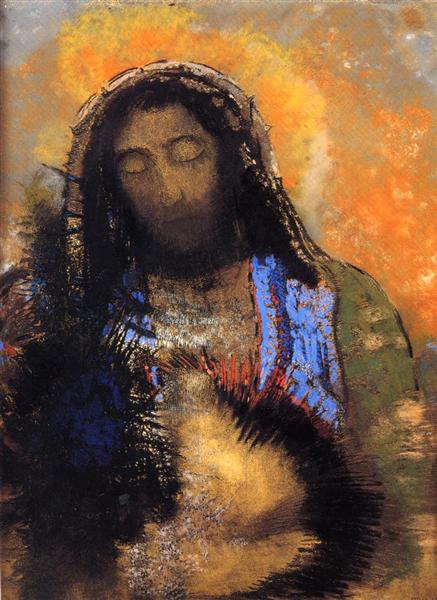
Which brings me back to the Sacred Heart. The consecration formula, pronounced by Archbishop William Lori during the bishops' conference semi-annual meeting in Washington, goes as follows:
O Most Sacred Heart of Jesus: You know the longings of our hearts, and you desire that we enjoy friendship with you. From your pierced side, you have poured out the wellspring of life, for which we thirst. Your heart burns with a love for all people to return to a right relationship with you. We celebrate the abundant gifts you have given this nation, founded on the self-evident truths that our Creator has endowed all people with the right to life, liberty, and the pursuit of happiness. We make reparation for the offenses against you and against human dignity that have taken place in this nation. May our hearts be united to yours, so that our families and communities enjoy peace and happiness; may broken relationships be reconciled, injustices repaired, and the wounds of our land be healed. May your holy Catholic Church serve as a sign, pointing all people to your infinite love. O Desire of Nations and Center of History, we ask you to bless these United States of America. Who live and reign with God the Father in the unity of the Holy Spirit, God, for ever and ever. Amen.
Now the president issued a message praising the consecration saying among other things, "our Nation and our culture confront a new set of menacing ideologies seeking once again to cast God out from our society. But today, as Catholic Bishops consecrate the United States of America to the Sacred Heart of Jesus in this 250th year of our Independence, we recommit ourselves….to defending our spiritual identity and great civilizational inheritance. Above all, we pray that America will continue for the next 250 years, and beyond, to be a land of faith, a country of miracles, and a light and glory to all nations" (June 11, 2026).
But we might wonder to which "menacing ideologies" is he referring? Those not part of his movement? And we might also ask if the president is prepared to make "reparation for the offenses against" the Heart of Christ, and "against human dignity that have taken place in this nation" so that "our families and communities enjoy peace and happiness; may broken relationships be reconciled, injustices repaired, and the wounds of our land be healed." Will he, for example, employ the authorization given him by the latest nativist decision of the Supreme Court to remove asylum seekers and those with Temporary Protected Status from this country?
As to whether this would be according to the Heart of Christ, I leave you with the latest teaching on the Sacred Heart of Jesus from Pope Francis' little-noticed encyclical Dilexit nos:
….by entrusting ourselves together to the heart of Christ, “over the ruins accumulated by hatred and violence, the greatly desired civilization of love, the Kingdom of the heart of Christ, can be built”. This clearly requires that we “unite filial love for God and love of neighbour”, and indeed this is “the true reparation asked by the heart of the Saviour”. In union with Christ, amid the ruins we have left in this world by our sins, we are called to build a new civilization of love. That is what it means to make reparation as the heart of Christ would have us do. Amid the devastation wrought by evil, the heart of Christ desires that we cooperate with him in restoring goodness and beauty to our world.
All sin harms the Church and society; as a result, “every sin can undoubtedly be considered as a social sin” and this is especially true for those sins that “by their very matter constitute a direct attack on one’s neighbour”. Saint John Paul II explained that the repetition of these sins against others often consolidates a “structure of sin” that has an effect on the development of peoples. Frequently, this is part of a dominant mind-set that considers normal or reasonable what is merely selfishness and indifference. This then gives rise to social alienation: “A society is alienated if its forms of social organization, production and consumption make it more difficult to offer the gift of self and to establish solidarity between people”. It is not only a moral norm that leads us to expose and resist these alienated social structures and to support efforts within society to restore and consolidate the common good. Rather, it is our “conversion of heart” that “imposes the obligation” to repair these structures. It is our response to the love of the heart of Jesus, which teaches us to love in turn. (Nos. 182-183)
This then is the Heart who invites us, Come to me, all you who labor and are burdened, and I will give you rest. Take my yoke upon you and learn from me, for I am meek and humble of heart; and you will find rest for yourselves. For my yoke is easy, and my burden light. (G). Not the yoke we place on others but the one he assumed on our behalf the week he entered Jerusalem, not in the presidential motorcade's Beast, but on a beast of burden, riding on an ass, on a colt, the foal of an ass — the Secretary, not of war, of Peace, who banishes the chariot and the horse and the warrior's bow while proclaiming peace to the nations (cf. I). Who lives and reigns, world without end. Amen.
Intercessions (Joe Milner; The Sunday Website)
For the Church: that God will help us take up the yoke of Christ and follow him in speaking the truth lovingly, offering forgiveness to those who wrong us, and praying for our enemies.
For the grace to be childlike: that we may learn dependence upon God and surrender our attempts to control our lives through knowledge, power, or possessions.
For a greater appreciation of the Sabbath: that God will show us how to disengage from our busyness and technology so that our minds and spirits can be refreshed through prayer, relationships, and nature.
For all who are weary in body, mind, or spirit: that the Spirit will restore strength to the physically exhausted, hope to those who are emotionally worn out, and energy to all who are exhausted through loving service to others.
For release from burdens and yokes: that God will free all who are struggling with addictions, abuse, or neglect and lead them to a new beginning.
For legislators and municipal council members: that God will give them wisdom in addressing current challenges, courage to work for the greater good, and inspiration that yields new approaches for the good of those whom they serve.
For an end to injustice and discrimination: that God will change the hearts and minds of those entrapped in judging people by externals, and help everyone to recognize the God-given dignity of each person.
For an end to gun violence in families, city streets, and workplaces: that God will change hearts, protect the innocent, and bring forth a new awareness of the dignity of each life.
For peace in all the areas of conflict: that God will end the violence in Israel, Lebanon, Iran and Gaza, and in all other areas so that everyone may live safely and with justice.
Father, Lord of heaven and earth, by whose gracious will the mysteries of the kingdom are revealed to the childlike, make us learn from your Son humility of heart, that in shouldering his yoke we may find refreshment and rest. We ask this through our Lord Jesus Christ, your Son, who lives and reigns with you in the unity of the Holy Spirit, God for ever and ever. Amen. (ICEL; 1998)
Offertory Hymn
Come to me, O weary traveler, Come to me with your distress; Come to me, you heavy burdened, Come to me and find your rest.
Do not fear, my yoke is easy; Do not fear, my burden’s light; Do not fear the path before you; Do not run from me in fright.
Take my yoke and leave your troubles; Take my yoke and come with me. Take my yoke, I am beside you; Take and learn humility.
Rest in me, O weary traveler; Rest in me and do not fear. Rest in me, my heart is gentle; Rest and cast away your care.
Communion Antiphon
Closing Hymn (John Michael Talbot)
All who are weary come unto Me
All who find life a burden
I will refresh you
Your soul will find rest
For My yoke is easy
And My burden is light
Take my yoke on your shoulders and learn
For I am gentle and humble
I will refresh you
Your soul will find rest…