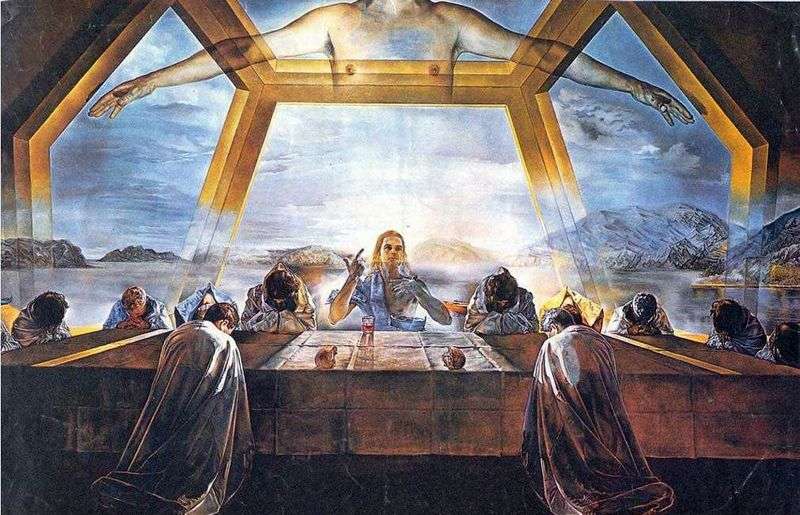
Introit
Collect
O God, who in this wonderful Sacrament
have left us a memorial of your Passion,
grant us, we pray,
so to revere the sacred mysteries of your Body and Blood
that we may always experience in ourselves
the fruits of your redemption.
Who live and reign with God the Father
in the unity of the Holy Spirit,
God, for ever and ever. Amen.
First Reading Deuteronomy 8:2–3, 14b–16a
Moses spoke to the people: 2 “Remember the long way that the Lord your God has led you these forty years in the wilderness, in order to humble you, testing you to know what was in your heart, whether or not you would keep his commandments. 3 He humbled you by letting you hunger, then by feeding you with manna, with which neither you nor your ancestors were acquainted, in order to make you understand that one does not live by bread alone, but by every word that comes from the mouth of the Lord. 14 “Do not exalt yourself, forgetting the Lord your God, who brought you out of the land of Egypt, out of the house of slavery, 15 who led you through the great and terrible wilderness, an arid wasteland with poisonous snakes and scorpions. He made water flow for you from flint rock, 16 and fed you in the wilderness with manna that your ancestors did not know, to humble you and to test you, and in the end to do you good.”
Responsorial Psalm
R. Praise the Lord, Jerusalem.
Second Reading 1 Corinthians 10:16–17
The cup of blessing that we bless, is it not a sharing in the blood of Christ? The bread that we break, is it not a sharing in the body of Christ? 17 Because there is one bread, we who are many are one body, for we all partake of the one bread. The word of the Lord.
Sequence Lauda, Sion
Laud O Zion, your salvation, Laud with hymns of exultation,
Christ, your king and shepherd true:
Bring him all the praise you know, He is more than you bestow.
Never can you reach his due.
Special theme for glad thanksgiving, Is the quick’ning and the living
Bread today before you set:
From his hands of old partaken, As we know, by faith unshaken,
Where the Twelve at Supper met.
Full and clear ring out your chanting. Joy nor sweetest grace be wanting,
From your heart let praises burst:
For today the feast is holden, When the institution olden
Of that supper was rehearsed.
Here the new law’s new oblation, By the new king’s revelation,
Ends the form of ancient rite:
Now the new the old effaces, Truth away the shadow chases,
Light dispels the gloom of night.
What he did at supper seated, Christ ordained to be repeated,
His memorial ne’er to cease:
And his rule for guidance taking, Bread and wine we hallow, making
Thus our sacrifice of peace.
This the truth each Christian learns, Bread into his flesh he turns,
To his precious blood the wine:
Sight has fail’d, nor thought conceives, But a dauntless faith believes,
Resting on a pow’r divine.
Here beneath these signs are hidden, Priceless things to sense forbidden;
Signs, not things are all we see:
Blood is poured and flesh is broken, Yet in either wondrous token
Christ entire we know to be.
Whoso of this food partakes, Does not rend the Lord nor breaks;
Christ is whole to all that tastes:
Thousands are, as one, receivers, One, as thousands of believers,
Eats of him who cannot waste.
Bad and good the feast are sharing, Of what divers dooms preparing,
Endless death, or endless life.
Life to these, to those damnation, See how like participation
Is with unlike issues rife.
When the sacrament is broken, Doubt not, but believe ‘tis spoken,
That each sever’d outward token doth the very whole contain.
Nought the precious gift divides, Breaking but the sign betides
Jesus still the same abides, Still unbroken does remain.
Lo! the angel’s food is given, To the pilgrim who has striven;
See the children’s bread from heaven, which on dogs may not be spent.
Truth the ancient types fulfilling, Isaac bound, a victim willing,
Paschal lamb, its lifeblood spilling, Manna to the fathers sent.
Very bread, good shepherd, tend us, Jesu, of your love befriend us,
You refresh us, you defend us, Your eternal goodness send us
In the land of life to see.
You who all things can and know, Who on earth such food bestow,
Grant us with your saints, though lowest, Where the heav’nly feast you show,
Fellow heirs and guests to be. Amen. Alleluia.
Gospel Acclamation
Gospel John 6:51–58
Jesus said to the crowds: 51 “I am the living bread that came down from heaven. Whoever eats of this bread will live forever; and the bread that I will give for the life of the world is my flesh.” 52 The people then disputed among themselves, saying, “How can this man give us his flesh to eat?” 53 So Jesus said to them, “Very truly, I tell you, unless you eat the flesh of the Son of Man and drink his blood, you have no life in you. 54 Those who eat my flesh and drink my blood have eternal life, and I will raise them up on the last day; 55 for my flesh is true food and my blood is true drink. 56 Those who eat my flesh and drink my blood abide in me, and I in them. 57 “Just as the living Father sent me, and I live because of the Father, so whoever eats me will live because of me. 58 This is the bread that came down from heaven, not like that which your ancestors ate, and they died. But the one who eats this bread will live forever.” 59 Jesus said these things while he was teaching in the synagogue at Capernaum.
Catena Nova
If you and I love our faulty fellow-human beings, how much more must God love us all? If we as human parents, can forgive our children any neglect, any crime, and work and pray patiently to make them better, how much more does God love us? You may say perhaps: "How do we know He does, if there is a He!" And I can only answer that we know it because He is here present with us today in the Blessed Sacrament on the altar, that He never has left us, and that by daily going to Him for the gift of Himself as daily bread, I am convinced of that love. I have the Faith that feeding at that table has nourished my soul so that there is life in it, and a lively realization that there is such a thing as the love of Christ for us. It took me a long time as a convert to realize the presence of Christ as Man in the Sacrament. He is the same Jesus Who walked on earth, Who slept in the boat as the tempest arose, Who hungered in the desert, Who prayed in the garden, Who conversed with the woman by the well, Who rested at the house of Martha and Mary, Who wandered through the cornfields, picking the ears of corn to eat. Jesus is there as Man. He is there, Flesh and Blood, Soul and Divinity. He is our leader Who is always with us. Do you wonder that Catholics are exultant in this knowledge, that their Leader is with them? "I am with you all days, even to the consummation of the world" (Dorothy Day).
Homily
On top of refusing to receive Communion from lay people or in my hand while standing, I made it a point to bow lower than everyone else during the mention of the Incarnation in the creed and to pound my chest loudly during the Confiteor. When people reached out their hand to hold mine during the Our Father, I shook my head—telling them afterward that it constituted liturgical abuse because it is not in the rubrics for Mass.
I would even recite some of the Mass responses in Latin. This was because I had developed a devotion to the Tridentine Latin Mass, and was determined to include as much from it as I could whenever I was “forced” to attend a Novus Ordo Mass, which wasn’t reverent enough for my liking.
And then he ran into a veteran Catholic by the name of Suzanne who offered Stephen some correction of her own. She told him, "'The liturgy is not about you….The liturgy is about communion with Christ through your being part of the body of believers. It’s not about your ‘self-expression’ or personal piety.” (Cf. Stephen G. Adubato, "Performative piety: Why liturgy is not a space for self-expression," America; May 8, 2026).
….your growth as a follower of Jesus will not ultimately depend on the quality of your prayer, the uprightness of your behavior, or the discipline of your spiritual life. Those things matter. But the foundation of everything is your willingness to keep returning to the mercy of God, which surpasses all understanding.
The faith you receive…asks something of you in every single moment. It asks you to defend the dignity of all life and to welcome the immigrant, to feed the hungry and to visit the prisoner, to fight for a living wage and to care for creation — and to see the image of God in the people your political party would rather you ignore.
God challenges my politics — and yours. No one is exempt.
Catholic social teaching does not fit neatly into any partisan box, and that is one of its great gifts — it will make you uncomfortable no matter where you sit on the political spectrum, because the Gospel always demands more than any platform can deliver.
The road through this life can be narrow and difficult. But you do not walk it alone. You have a community of the living and the dead, of sinners and saints, walking with you the whole way — Augustine and Aquinas, Dorothy Day and Oscar Romero, your grandmother who prayed for you every night, and the stranger in the pew beside you tonight who is just as scared and just as hopeful as you are. (Cf. Christopher Hale, "A Letter to New Catholics Entering the Church Tonight," Letters from Leo; April 4, 2026).
And so, on this Feast of the Body and Blood of Christ, where we sit, sometimes uncomfortably, near those whom we wish we liked more — and probably, they us — what matters is how in "this sacred mystery…the human race, bounded by one world, may be enlightened by one faith and united by one bond of charity" (Preface of the Holy Eucharist II). Through Christ our Lord. Amen.
Intercessions (Joe Milner; The Sunday Website)
For the Church: that through our sharing in the Eucharist, we may be transformed more and more into the Body of Christ.
For Christian unity: that Christ’s Body and Blood given for us may heal all the divisions within the Christian community and bind us together into one body in love and service.
For all who cannot receive the Eucharist, particularly those in isolation, in refugee centers, detained or imprisoned for their faith: that God will strengthen them and make God’s presence known to them through others.
For all who are suffering from famine or drought: that God will nurture them, sustain them on their journey, and supply the assistance they need.
For all who have experienced violence: that God will protect them from further harm, right the injustices that have occurred, and give them hope.
For governmental and civic leaders: that God will give them wisdom to address the unrest, insight into righting the injustices, and words that will unite society.
For all who are ill and those care for them: that God will send healing to the sick, strength and wisdom to those who care for them and inspiration to those researching treatments.
The bread you give, O God, is Christ’s flesh for the life of the world; the cup of his blood is your covenant for our salvation. Grant that we who worship Christ in this holy mystery may reverence him in the needy of this world by lives poured out for the sake of that kingdom where he lives and reigns with you in the unity of the Holy Spirit, God for ever and ever. Amen. (ICEL; 1998)
Offertory Chant
Offertory Motet (Jean Berger)
The eyes of all wait upon thee; and thou givest them their meat in due season.
Thou openest thine hand, and satisfiest the desire of ev’ry living thing, of ev’ry living thing.
Communion Antiphon
Concluding Hymn
I received the living God,
and my heart is full of joy.
I received the living God,
and my heart is full of joy.
Jesus said: "I am the Bread
Kneaded long to give you life;
You who will partake of me
Need not ever fear to die."
Jesus said: "I am the Way,
And my Father longs for you;
So I come to bring you home
To be one with him anew."
Jesus said: "I am the Truth;
If you follow close to me,
You will know me in your heart,
And my word shall make you free."