Introit
Collect
Grant, O Lord,
that we may always revere and love your holy name,
for you never deprive of your guidance
those you set firm on the foundation of your love.
Through our Lord Jesus Christ, your Son,
who lives and reigns with you in the unity of the Holy Spirit,
one God, for ever and ever. Amen.
First Reading Jeremiah 20:10–13
Jeremiah cried out: 7 “O Lord, you have enticed me, and I was enticed; you have overpowered me, and you have prevailed. I have become a laughingstock all day long; everyone mocks me. 10 For I hear many whispering: ‘Terror is all around! Denounce him! Let us denounce him!’ All my close friends are watching for me to stumble. ‘Perhaps he can be enticed, and we can prevail against him, and take our revenge on him.’” 11 But the Lord is with me like a dread warrior; therefore my persecutors will stumble, and they will not prevail. They will be greatly shamed, for they will not succeed. Their eternal dishonour will never be forgotten. 12 “O Lord of hosts, you test the righteous, you see the heart and the mind; let me see your retribution upon them, for to you I have committed my cause. 13 “Sing to the Lord; praise the Lord! For he has delivered the life of the needy from the hands of evildoers.”
Responsorial Psalm Psalm 69:8–10, 14, 17, 33–35
R/. Lord, in your great love, answer me.
Second Reading Romans 5:12–15
Just as sin came into the world through one man, and death came through sin, so death spread to all because all have sinned. 13 Sin was indeed in the world before the law, but sin is not reckoned when there is no law. 14 Yet death exercised dominion from Adam to Moses, even over those whose sins were not like the transgression of Adam, who is a type of the one who was to come. 15 But the free gift is not like the trespass. For if the many died through the one man’s trespass, much more surely have the grace of God and the free gift in the grace of the one man, Jesus Christ, abounded for the many.
Gospel Acclamation
Gospel Matthew 10:26–33
Jesus summoned the twelve and sent them out with the following instructions: 26 “Have no fear; for nothing is covered up that will not be uncovered, and nothing secret that will not become known. 27 What I say to you in the dark, tell in the light; and what you hear whispered, proclaim from the housetops. 28 “Do not fear those who kill the body but cannot kill the soul; rather fear him who can destroy both soul and body in hell. 29 Are not two sparrows sold for a penny? Yet not one of them will fall to the ground apart from your Father. 30 And even the hairs of your head are all counted. 31 So do not be afraid; you are of more value than many sparrows. 32 “Everyone therefore who acknowledges me before others, I also will acknowledge before my Father in heaven; 33 but whoever denies me before others, I also will deny before my Father in heaven.”
Catena Nova
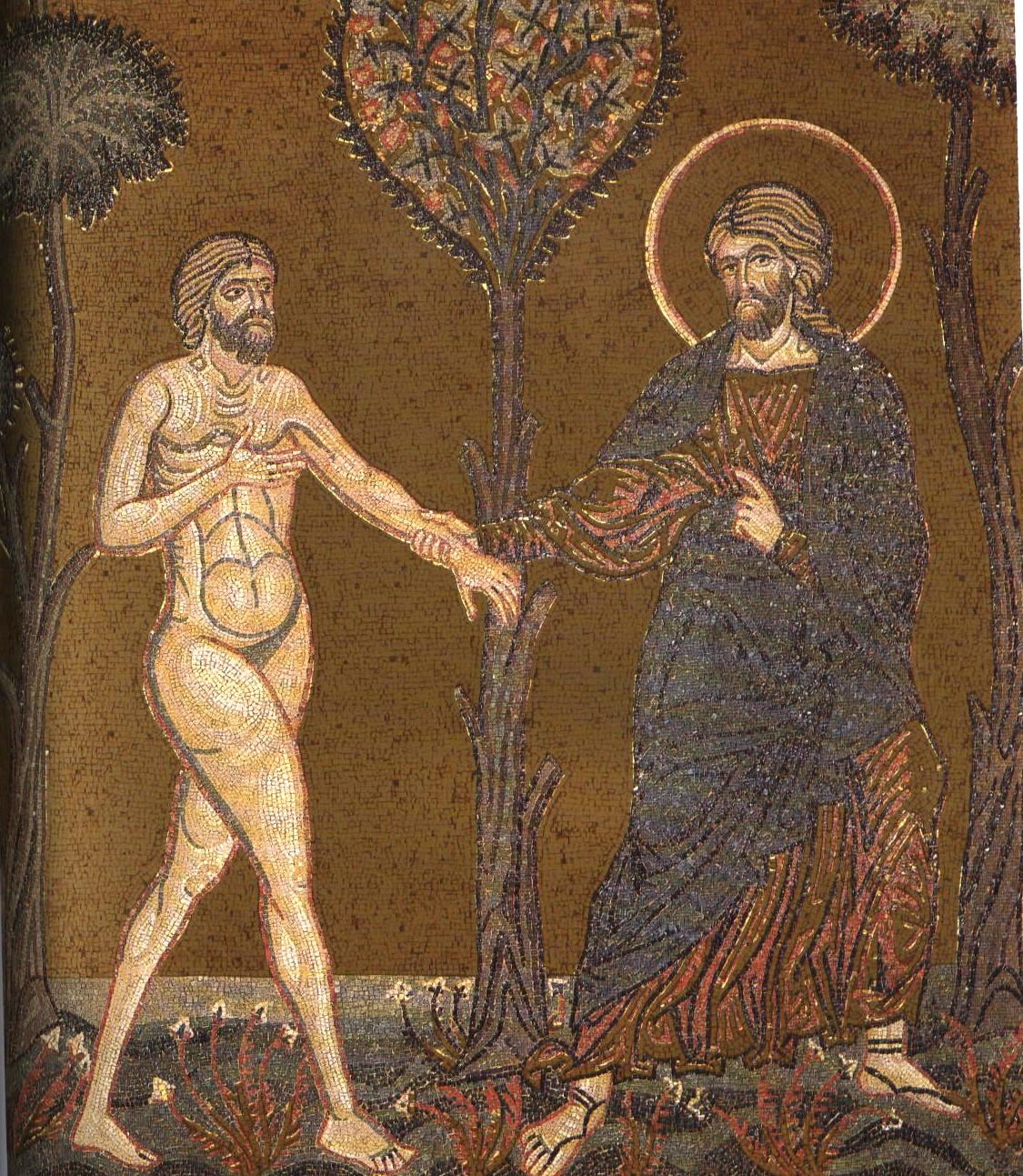
Wonder not that the whole world was ransomed; for it was no mere human being, but the only-begotten Son of God, who died on its behalf. Moreover one man’s sin, even Adam’s, had power to bring death to the world; but if by the trespass of the one death reigned over the world, how shall not life much rather reign by the righteousness of the One? And if because of the tree of food they were then cast out of paradise, shall not believers now more easily enter into paradise because of the Tree of Jesus? If the first human formed out of the earth brought in universal death, shall not He who formed him out of the earth bring in eternal life, being Himself the Life? (St. Cyril of Jerusalem)
God is not ignorant of anything that happens in creation, and if God loves us more truly than the best human father, and if God loves us so as to have numbered our very hairs, then we need not be afraid. Jesus said this not to indicate that God literally has a number placed on the very hairs of our head but rather to show that God has perfect knowledge of everything about us and providentially cares for everything about us. Therefore, if God both knows all things that happen to us and is able to save us and willing to do so, then whatever we may be suffering, we need not think that God has forsaken us in our suffering. For it is not God’s will to keep us wholly separated from that which elicits dread but rather to persuade us not to make an idol out of whatever we dread. It is this, more than anything else, that constitutes deliverance from dread. “Therefore, don’t be afraid. You are of more value than many sparrows.” Don’t you see that God views your fear with more concern than the lives of many sparrows? He already knows the secrets of your heart. Hence Jesus adds, “Do not fear.” For even if that which you dread prevails, it prevails only over your body; this is the limited part of yourself, which nature will surely take in due time and bring to an end. (St. John Chrysostom)
Do not say,“This happened by chance, while this came to be of itself.” In all that exists there is nothing disorderly, nothing indefinite, nothing without purpose, nothing by chance …. How many hairs are on your head? God will not forget one of them. Do you see how nothing, even the smallest thing, escapes the gaze of God?” (St. Basil the Great)
The martyrs who found themselves hard pressed, beset by danger from violent storms of hatred in this world, a danger not so much to their bodies which, after all, they would have to part with sometime, but rather to their faith. If they were to give way, if they should succumb either to the harsh tortures of their persecutors or to love of this present life, they would forfeit the reward promised them by the God who had taken away all ground for fear. Not only had he said: “Do not be afraid of those who kill the body but are unable to kill the soul.” He had also left them his own example. The precept he had enjoined on them he personally carried out, without attempting to evade the hands of those who scourged him, the blows of those who struck him, or the spittle of those who spat on him. Neither the crown of thorns pressed into his head nor the cross to which the soldiers nailed him encountered any resistance from him. None of these torments did he try to avoid. Though he himself was under no obligation to suffer them, he endured them for those who were, making his own person a remedy for the sick. And so the martyrs suffered, but they would certainly have failed the test without the presence of him who said: “Know that I am with you always, until the end of time” (St. Augustine).
Arise, then, beloved of Christ! Imitate the dove that nests in a hole in the cliff [Cant. 2:14], keeping watch at the entrance like the sparrow that finds a home. There like the turtledove hide your little ones, the fruit of your chaste love. Press your lips to the fountain, draw water from the wells of your Savior [Is. 12:3]; for this is the spring flowing out of the middle of paradise, dividing into four rivers, [Gen. 2:10] inundating devout hearts, watering the whole earth and making it fertile. Run with eager desire to this source of life and light, all you who are vowed to God’s service. Come, whoever you may be, and cry out to him with all the strength of your heart. O indescribable beauty of the most high God and purest radiance of eternal light! Life that gives all life, light that is the source of every other light, preserving in everlasting splendor the myriad flames that have shone before the throne of your divinity from the dawn of time! Eternal and inaccessible fountain, clear and sweet stream flowing from a hidden spring, unseen by mortal eye! None can fathom your depths nor survey your boundaries, none can measure your breadth, nothing can sully your purity. From you flows the river which gladdens the city of God [Ps. 46:4] and makes us cry out with joy and thanksgiving in hymns of praise to you, for we know by our own experience that with you is the source of life, and in your light we see light [Ps. 36:9] (St. Bonaventure).
I will trust Him. Whatever, wherever I am, I can never be thrown away. If I am in sickness, my sickness may serve Him, in perplexity, my perplexity may serve Him, if I am in sorrow, my sorrow may serve Him. My sickness, or perplexity, or sorrow, may be necessary causes of some great end, which is quite beyond us. He does nothing in vain! (St. John Henry Newman)
Too easily are we inclined to imagine that God created this world for a purpose. We are so caught up in purpose that we would feel more comfortable if God shared our preoccupation with work. But God plays. The birds in a single tree are sufficient proof that God did not set out with a divine no-nonsense attitude to make a creature that would perfectly achieve the purpose of a bird. What could that purpose be I wonder? There are titmice, juncos, and chickadees; woodpeckers, gold finches, starlings and crows. The only bird God never created is the no-nonsense bird. As we open our eyes and hearts to God's creation, we quickly perceive that God is playful, a God of leisure (Br. David Steindl-Rast).
Homily
Intercessions (Mary Grace Melcher)
For the whole church, that we may go out to meet the inevitable reality of persecution on earth for the name of Jesus, because we have seen in advance the reward that our loyalty will bring us.
That those who work and suffer for life and for peace may refuse to be intimidated, but speak the truth with justice in the name of God.
For those who are feeling the pressure of divine testing in their lives as God probes their motives and their actions, that they may let themselves be converted.
That we may have the courage to acknowledge Jesus before others, so that He will recognize us before the face of His heavenly Father.
For those who are caught in abuse, neglect, illness; for the forgotten lowly ones who fall to the ground unnoticed like the sparrows, that they may be comforted by those who realize how precious they are in God’s sight.
For our faithful departed ones, that the grace of God and the gracious gift of Jesus Christ may overflow for them, purifying them and bringing them rejoicing into heaven.
True and faithful God, you give courage to the fearful and endurance to martyrs. Sustain us as followers of your Son Jesus, that with boldness and conviction we may acknowledge him before the world. We ask this through Christ our Lord. Amen. (ICEL; 1998)
Offertory Hymn (Dan Schutte)
What you hear in the dark
you must speak in the light.
You are salt for the earth,
You are light for the world.
Let your light be seen:
Stand against the night.
Let your words of mercy tell
The glory of the Lord.
Earth shall pass away:
Heaven will be undone.
Never shall the word of God
Be broken or destroyed.
God will keep you safe;
See the sparrows that fly.
You are worth a world of sparrows
Sheltered, by the Lord.
Strengthen weary arms;
Steady all trembling knees.
Say to every fearful heart:
Have courage, trust in God.
Communion Antiphon
Closing Hymn (Text: Brian Wren; Tune: David Haas)
How shall I sing to God when life is filled with gladness, loving and birth, wonder and worth?
I'll sing from the heart, thankfully receiving, joyful in believing.
This is my song, I'll sing it with love.
How shall I sing to God when life is filled with bleakness, empty and chill, breaking my will?
I'll sing through my pain, angrily or aching, crying or complaining.
This is my song, I'll sing it with love.
How shall I sing to God and tell my Savior's story:
Passover bread, life from the dead?
I'll sing with my life, witnessing and giving, risking and forgiving.
This is my song, I'll sing it with love.