Introduction
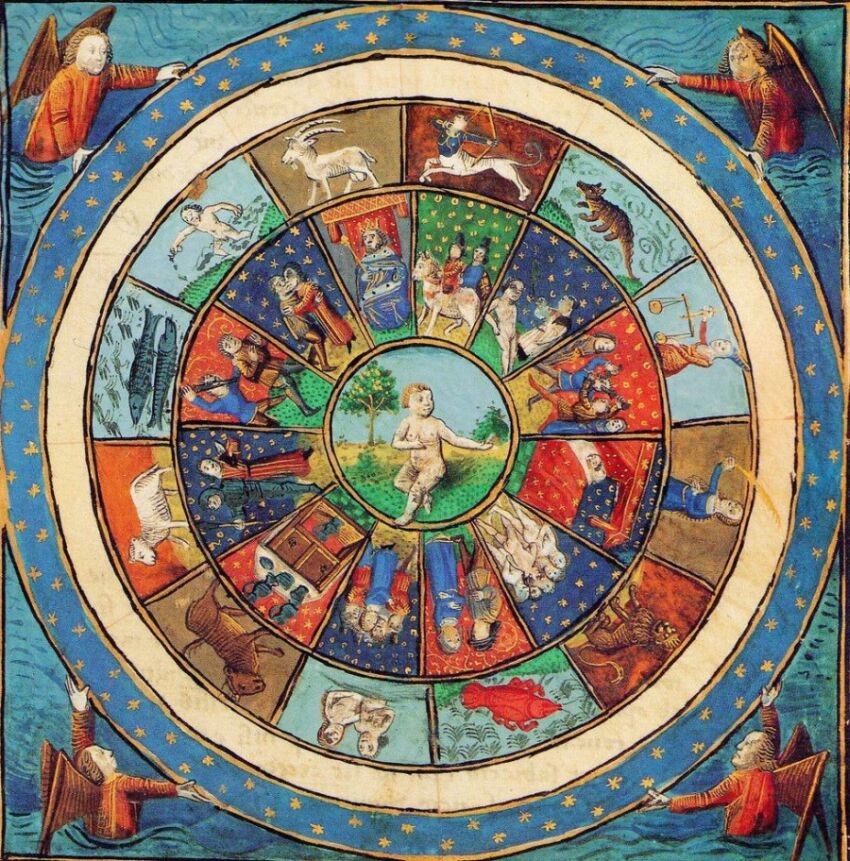
Four times a year, the Church sets aside three days to focus on God's creation. These quarterly periods take place around the beginning of the four seasons of nature. Embertides were spent in fasting and abstinence for the purpose of thanking God for creation's gifts and asking for the self-discipline to use them in moderation. They were also the tradtional times for ordinations to take place. The fasts, known as "the fast of the four seasons" were made optional following the liturgical reforms under Pope Paul VI which, in my opinion, was a tremendous loss. There is every reason to restore them in these days of materialist excess, ecological devastation and crises affecting the church's ministry. The first of the fasts takes place during Advent on the Wednesday, Friday, and Saturday following the feast of St. Lucy on December 13. This service may be used on any of those days along with a penitential practice of one's choosing to curb the immoderation surrounding the Christmas feast, help heal the earth and support the vocation of those called to service in the church.
Opening Antiphon
Drop down, ye heavens, from above, and let the skies pour down righteousness.
Be not wroth very sore, O Lord,
neither remember iniquity forever:
thy holy cities are a wilderness,
Sion is a wilderness, Jerusalem a desolation:
our holy and our beautiful house,
where our fathers praised thee. [Antiphon]
We have sinned, and are as an unclean thing,
and we all do fade as a leaf:
and our iniquities, like the wind,
have taken us away:
thou hast hid thy face from us:
and hast consumed us, because of our iniquites. [Antiphon]
Ye are my witnesses, saith the Lord,
and my servant whom I have chosen:
that ye may know me and believe me:
I, even I, am the Lord,
and beside me there is no Saviour:
and there is none that can deliver out of my hand. [Antiphon]
Comfort ye, comfort ye my people,
my salvation shall not tarry:
I have blotted out as a thick cloud
thy transgressions: Fear not, for I will save thee:
For I am the Lord thy God,
the Holy One of Israel, thy Redeemer. [Antiphon]
Opening Collect
Almighty God, give us grace that we may cast away the works of darkness, and put upon us the armour of light, now in the time of this mortal life, in which your Son Jesus Christ came to visit us in great humility; that in the last day, when he shall come again in his glorious Majesty to judge both the living and the dead, we may rise to the life immortal, through him who lives and reigns with you in the unity of the Holy Spirit, God, for ever and ever. Amen.
First Reading (Isaiah 35: 1-7)
Thus says the LORD: The wilderness and the dry land shall be glad, the desert shall rejoice and blossom; like the crocus it shall blossom abundantly, and rejoice with joy and singing. The glory of Lebanon shall be given to it, the majesty of Carmel and Sharon. They shall see the glory of the Lord, the majesty of our God. Strengthen the weak hands, and make firm the feeble knees. Say to those who are of a fearful heart, ‘Be strong, do not fear! Here is your God. He will come with vengeance, with terrible recompense. He will come and save you.’ Then the eyes of the blind shall be opened, and the ears of the deaf unstopped; then the lame shall leap like a deer, and the tongue of the speechless sing for joy. For waters shall break forth in the wilderness, and streams in the desert; the burning sand shall become a pool, and the thirsty ground springs of water; the haunt of jackals shall become a swamp, the grass shall become reeds and rushes.
Psalm Response
From a homily by Pope St. Leo the Great (Sermon XII; "On the Fast of the Tenth Month", I)
Let that which pleases GOD, please us too. Let us rejoice in whatever measure of gifts He gives. Let him who has used great possessions well, use small ones also well. Plenty and scarcity may be equally for our good, and even in spiritual progress we shall not be cast down at the smallness of the results, if our minds become not dry and barren. Let that spring from the soil of our heart, which the earth gave not. To him that fails not in good will, means to give are ever supplied. Therefore, dearly beloved, in all works of godliness let us use what each year gives us, and let not seasons of difficulty hinder our Christian benevolence. The LORD knows how to replenish the widow’s vessels, which her pious deed of hospitality has emptied: He knows how to turn water into wine: He knows how to satisfy 5,000 hungry persons with a few loaves. And He who is fed in His poor, can multiply when He takes what He increased when He gave. IV. Prayer, fasting and almsgiving are the three comprehensive duties of a Christian. But there are three things which most belong to religious actions, namely prayer, fasting, and almsgiving, in the exercising of which while every time is accepted, yet that ought to be more zealously observed, which we have received as hallowed by tradition from the apostles: even as this tenth month brings round again to us the opportunity when according to the ancient practice we may give more diligent heed to those three things of which I have spoken. For by prayer we seek to propitiate GOD, by fasting we extinguish the lusts of the flesh, by alms we redeem our sins: and at the same time GOD’S image is throughout renewed in us, if we are always ready to praise Him, unfailingly intent on our purification and unceasingly active in cherishing our neighbour. This threefold round of duty, dearly beloved, brings all other virtues into action: it attains to GOD’S image and likeness and unites us inseparably with the Holy Spirit. Because in prayer faith remains stedfast, in fastings life remains innocent, in almsgiving the mind remains kind. On Wednesday and Friday therefore let us fast: and on Saturday let us keep vigil with the most blessed Apostle Peter, who will deign to aid our supplications and fast and alms with his own prayers through our LORD Jesus Christ, who with the Father and the Holy Ghost lives and reigns for ever and ever. Amen.
Interlude
Second Reading (1Thess 5:16-24)
My brothers and sisters, 16 rejoice always, 17 pray without ceasing, 18 give thanks in all circumstances; for this is the will of God in Christ Jesus for you. 19 Do not quench the Spirit. 20 Do not despise the words of prophets, but test everything; 21 hold fast to what is good; 22 abstain from every form of evil. 23 May the God of peace himself sanctify you entirely; and may your spirit and soul and body be kept sound and blameless at the coming of our Lord Jesus Christ. 24 The one who calls you is faithful, and he will do this.
Meditation (Fr. Alfred Delp S.J.)
Those for whom the hour of freedom struck in the stable of Bethlehem had faced and overcome the wilderness, both the external wilderness of isolation, forsaken homeland, lost relationships and friendships of a momentous and strenuous pilgrimage, and the inner wilderness of uncertainty, doubt, fear, and anxiety. It had been a long and a weary journey and their faces still bore the marks of the hours of strain even in the glow of the blissful encounter. The wilderness has its proper place in the drama. Human freedom is fruit of liberation, of the persistent and tireless scaling of the enemy fortification.
There are no more profitable places in history than wildernesses—vast areas—the sea, high mountains, trackless forests, plain and pampas and steppe, barren land as well as fruitful, all exercise their own peculiar influence, not only on the physical being but even more on the dispositions and characters of the human beings affected by them. They all leave their mark on history. And of all wildernesses the streets of the great cities—deserts of stone—are unique in that again and again they have ended up as the graveyard of history. The wilderness concerns all humanity, all its actions and decisions, in a very special way.
Any life that cannot measure up to the wilderness, or seeks to evade it, is not worth much. There must be periods of withdrawal alternating with periods of activity and companionship or the horizons will shrink and life loses its savor…
And the world too will be in a bad way if ever it happens that there are no morewilderness, no more silent unspoiled places to which a man can retire and think, if every corner of the earth is filled with noise and underground tunnels and soaring airplanes and communication networks, if cables and sewers scar the surface and undermine the crust. Mankind needs to keep a few quiet corners for those who seek a respite and feel the urge to retreat for a while from over-civilization to creative silence.
For those who occasionally feel the hermit instinct there should at least be a chance to try it out. The law of absolute utility, of total functionalism, is not a law of life. There is an extraordinary close connection between the wilderness and fruitful, satisfying life. Where all the secluded places ring with tumult, where the silent muses have been degraded to pack horses and all the sources of inspiration forced into the service of official mills grinding out propaganda, the wilderness has indeed been conquered—but at what price. Even greater devastation has taken its place.
The wilderness has a necessary function in life. “Abandonment” one of my friends called it and the word is very apt. Abandonment to wind and weather and day and night and all the intervening hours. And abandonment to the silence of God, the greatest abandonment of all. The virtues that thrives most on it—patience—is the most necessary of all virtues that spring from the heart—and the Spirit…
The wilderness represents the law of endurance, the firmness that makes a man. It is the quiet corner reserved for tears, prayers for help, humiliation, terror. But it is a part of life and to try to avoid it only postpones the trial.
(Fr. Delp, a Jesuit, wrote this meditaion from a Nazi prison cell less than a month before his execution for high treason in 1945).
Advent Prayer of Lament
Lord, we look with hope for the day when there is no more grief, no more sorrow, no more sin, no more death. When you return, there will be no sickness, no more weakness, no more anxiety, no more failing strength, but we will be made complete. R/. We will see you, and our souls will overflow with joy, worship, and blessings.
Here, we see things darkly, our hopes are obscured by the suffering that surrounds us and by the sinful longings of our own hearts. R/. We prefer comfort to holiness and our hopes are set on temporary material things, rather than eternal promises.
Give us a hunger for heaven by opening our eyes to how far we are from home. R/. Show us how unsatisfying this world is, so we can find satisfaction in the Gospel and cling to Christ alone. Amen. (Mike Cosper, The Open Sourcebook)
Concluding Collect
O Lord our God, as we wait for the coming of your Son our Lord, preserve us in watchfulness and faith: that when he shall appear he may not find us asleep in sin but active to serve him and joyful to praise him; through Jesus Christ your son our Lord, who lives and reigns with you, in the unity of the Holy Spirit, God, forever and ever. Amen. (Cf. Anglican Ordinariate)
Concluding Hymn