July 7
St. Prosper of Aquitaine
Life (403-460)
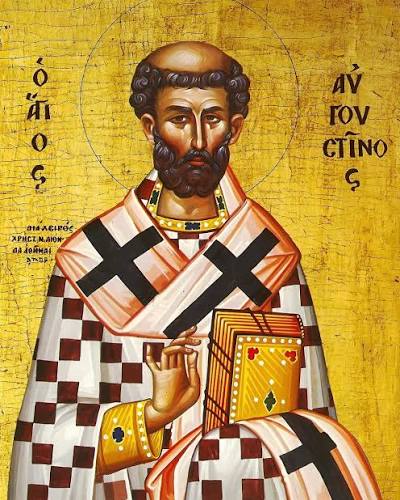
Saint Prosper was born in the Roman province of Aquitaine in the year 403. He is known chiefly through his writings, which reveal that in his youth he had applied himself to all branches both of sacred and secular learning. Because of the purity and sanctity of his manners, the writers of his time testify that he was a holy and venerable man. By his labors in France against the semi-Pelagian heretics, he was a strong collaborator of Saint Augustine in Africa. He was in correspondence with the African doctor, who wrote two of his works to refute and give light to the semi-Pelagians: On the predestination of the Saints and On the gift of perseverance. The enemies of Saint Augustine turned against Saint Prosper also, publishing fifteen errors which they attributed to the latter, then sixteen propositions supposedly clarifying Augustine's true sentiments, and spread them widely. The Saint with gentleness answered all these writings without acrid reprisals.
Saint Prosper, insofar as is known, was not an ecclesiastic; but being of great virtue and possessing extraordinary talents and learning, he dealt with delicate questions with remarkable insight. Saint Leo the Great, when chosen Pope in 440, invited him to Rome, made him his secretary, and employed him in the most important affairs of the Church. It was primarily Saint Prosper who finally crushed the Pelagian heresy definitively, when it was raising its head in the see of Peter. Its complete overthrow is said to be due to his zeal, learning, and unwearied endeavors. The date of his death remains uncertain, but he was still living in 455, the date at which his Chronicle concludes.
Les Petits Bollandistes: Vies des Saints, by Msgr. Paul Guérin (Bloud et Barral: Paris, 1882), Vol. 7; Little Pictorial Lives of the Saints, a compilation based on Butler's Lives of the Saints, and other sources by John Gilmary Shea (Benziger Brothers: New York, 1894).
Scripture (Eph 2:8-10)
(Year A). Those who approach God, leaning on Him with a desire to be saved, are saved indeed. For it is divine inspiration that enables them to conceive this desire for salvation and they come to knowledge of Truth enlightened by Him who calls them. They are indeed children of promise, the reward of faith, the spiritual descendants of Abraham, “a chosen race, a holy priesthood” (1 Pt 2:9), foreknown from long ago and predestined for eternal life. … Through the mediation of Isaiah, our Lord makes known His grace to us, to make new creatures of us all – “See, I am doing something new! Now it springs forth, do you not perceive it? In the desert I make a way, in the wasteland, rivers …)for my chosen people to drink, the people whom I formed for myself that they might announce my praise” And elsewhere …) “To me every knee shall bend, by me every tongue shall swear” (Is 43:19 f; 45:23).
There is no question but that all this will come to pass because God’s foreknowledge never fails nor do His plans alter, His will is ever active and His promises cannot be mistaken. Therefore, all those to whom these words refer shall be saved. For He sets His laws in their consciences and with His finger He writes them in their hearts (Rom 2:15). They gain access to knowledge of God, not under the influence of human teaching but the guidance of the best of masters – “Therefore, neither the one who plants nor the one who waters is anything but only God, who causes the growth” (1 Cor 3:7). … It is given to them all to have a changed heart and just judgement together with an upright will. God brings fear to birth in these people so that they may be instructed in His commandments. … They rejoice in the power of His mercy and all the miracles He has done, for God has chosen them and made them His children, heirs of the new covenant (Jr 31:31).” (The Call to All Nations)
Musical Selection
All-powerful and ever-living God,
you have given the Church Saint Prosper
as teacher of the faith and advocate before the throne of grace;
grant that what he taught at the Spirit’s prompting
may take root in our hearts
and that his prayers may bring us your merciful protection.
We ask this through our Lord Jesus Christ, your Son,
who lives and reigns with you in the unity of the Holy Spirit,
God for ever and ever. (ICEL; 1998)