Season of Creation (Oct 4)
October 04, 2026
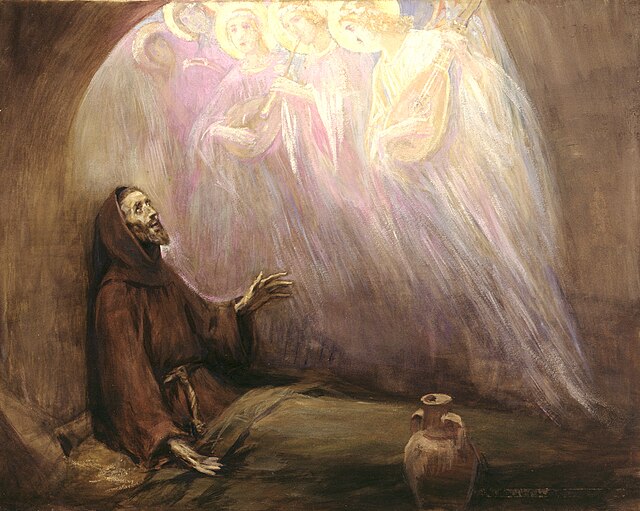
Oct 4 (Feast of St. Francis of Assisi)
Canticle of the Creatures
Most high, all powerful, all good Lord! All praise is Yours, all glory, all honor, and all blessing.
To You, alone, Most High, do they belong. No man is worthy to pronounce Your name.
Be praised, my Lord, through all Your creatures, especially through Sir Brother Sun, who brings the day; and You give light through him. And he is beautiful and radiant in all his splendor! Of You, Most High, he bears the likeness.
Be praised, my Lord, through Sister Moon and the stars; through Brothers Wind and Air, and clouds and storms, and all the weather, through which You give us sustenance.
Through Sister Water; she is humble and pure.
Through Brother Fire, he is beautiful and strong.
Through our sister Mother Earth, through whom you feed us and rule us, and provides various fruits, flowers and herbs.
Through those who forgive for love of You; through those who endure sickness and trial.
Happy those who endure in peace, for by You, Most High, they will be crowned.
Through our sister Bodily Death, from whose embrace no living person can escape. Woe to those who die in sin! Happy those who find Your most holy will.
Praise and bless my Lord, and give thanks, and serve Him with great humility. Praise and bless my Lord, and give thanks, and serve Him with great humility!
Meditation
A reflection by Fr. Kevin Mullen, OFM
After reading the Canticle of the Creatures, some might be tempted to say that St. Francis was a naive optimist. Did he really see and believe in the harmony that he sings about in the Canticle of the Creatures? At first glance when you read the Canticle, everything in the created order seems not only to work and get along, but also to have an incredible sense of balance and harmony. All the positive dimensions of creations’ elements and creatures are stressed and highlighted as being good. So, we marvel that Brother Sun gives us the day and fills us with light. However, we never hear about the parched earth, or people being overcome by sun stroke. We celebrate Sister Water, who is cool and refreshing, yet we never hear about destructive floods and tsunamis. Brother Wind brings us cool and gentle breezes while Brother Fire warms us and comforts us in the darkness, yet no mention is made of hurricanes and the destruction of property and lives caused by gale force winds or the onslaught of death caused by fire storms or massive lightning strikes on the earth. There seems to be no suffering, no pain, and no harm in the Canticle.
Such a view can be challenged immediately by recalling the life-situation of the composer - Francis of Assisi. First and foremost, he was a person who lived in the early part of the 13th century - a time when all people, rich and poor alike, were exposed much more than we in developed nations are today to the dimensions of the weather and the natural order. From his biographers, we know that Francis was an itinerant preacher, frequently walking the roads and living in caves and rough huts. He was exposed regularly to wind, rain, snow, ice, and the heat of the day throughout his many travels within Italy and on his one “overseas trip” to Egypt. He knew the blessings of nature, and he also knew that its power sometimes could be uncomfortable, and at other times, it could be destructive. He also knew and witnessed hatred, violence, suffering, and death among people who were caught up in personal fights or war.
Francis was a realist - he recognized what was taking place all around him - the good and the bad - and he never tried to escape from the harsh truths of human existence. Yet, what set him apart from others was that while recognizing the broken nature of creation, he still affirmed its inherent goodness and beauty because he knew and believed that all the created order came into existence by the command of a loving God. Francis was able to reconcile the positive and negative dimensions of the created order and understand that God, the Creator of all, had implanted harmony and goodness in creation and further that God desired all reality to work together.
Within this perspective, the Canticle is not an expression of naive optimism, but rather a look at a distinct perspective on creation which highlights reconciliation and harmony. It offers us an integrated view of the created order and human beings’ relationship to it. Reflecting on the meaning of the Canticle of the Creatures, the late Pope Francis, understood it as an example of “integral ecology” - a view which sees all reality working together in a harmonious manner. Such a view offers us hope and inspires us to work together to restore, renew, and, with God’s grace, re-create our shared home.
Musical Selection
Prayer
O God, you ever delight to reveal yourself
to the child—like and lowly of heart:
grant that, following the example of the blessed Francis,
we may count the wisdom of this world as foolishness
and know only Jesus Christ and him crucified,
who lives and and reigns with you,
in the unity of the Holy Spirit,
God, now and for ever. Amen. (English Missal)