Sept 21
Scripture: Matthew 28: 16-20
Saint Francis did certainly not think of our modern problems when he composed the Canticle of Creatures, but when we read it today, we find in it the dignity of creation. Francis sings how sun, moon, and the stars, and earth, water, air, and fire all together proclaim the praise of God. This is kind of abstract, as he says little about plants and nothing about animals. You need to know that Francis wrote this canticle in awareness of the closeness of his death and in the hope for eternal life. He already sees creation at the end of time in its perfection in the creator. He no longer sings of our world with its short and simple life stories, but he already anticipates the world in its fulfillment at the end of time.
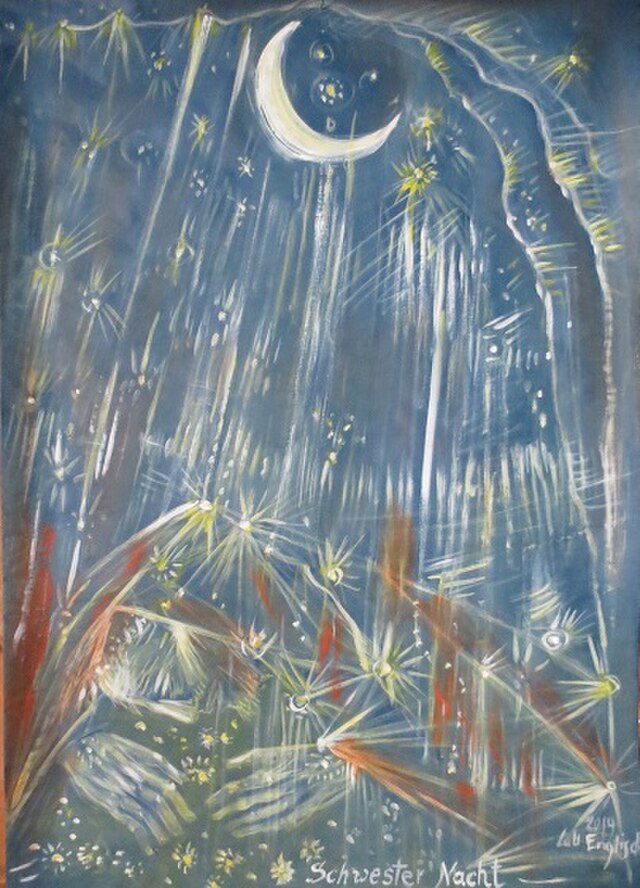
But in this song about the heavenly bodies and earthly elements—lifeless to us—Francis sees brothers and sisters singing the praises of God. This is an important difference to other religious compositions of this kind. In the song of the three young men in the fiery furnace (Daniel 3:51-90) are many more creatures by which God is praised. But contrary to Francis’s canticle, the creatures are not brothers and sisters of the men. Even if Francis’s canticle does not mention the living creatures of our experience, it is nevertheless full of the life of the transformed creation in which all creatures are together as brothers and sisters. When little children will complete their drawings of the sun or the moon by giving them faces, then they are closer to the wisdom of God than astrophysicists. And when Francis, close to death and in great suffering, once again gives faces to sun, moon, and stars, then he is not returning into childishness. He recognizes the importance of life in the fragility of his own life. He understands that his own personal life and the life of created beings and all creation are eternally carried by the life of God. Therefore, the song concludes with the reminder that bodily death is not to be feared. Even bodily death belongs to the eternal family of that enters the fullness of life. Francis reminds us that those who live in accordance with God’s will have escaped death as the annihilation of their being. For them, the embrace of Sister Death is their entry into the fullness of life.
But in between these lines carried by the philosophically understood life comes something very important, and it refers to the concrete situation of Francis at the end of his life. He is suffering from severe illness, and his city is divided by political strive. He calls himself and all others to find peace for the love of God and live with one another in peaceful relationships. Crowned by God will be those who can transform their suffering into acts of peace making.
When you take Francis’s poetry into our modern context, then you are not far from his thought when you seek peaceful rather than destructive interaction with nature and its resources. We must understand how the special dignity of human beings is inseparable from the dignity of all other living creatures. Only those who know this and can live like this can truly live. Only they can understand the life of others, no matter whether they are a mere microbe or an irreplaceable biotope or the people of a whole city. In the sense of a creative participation in nature as our common home, instead of domineering control of the environment, humanity can truly be the crown of creation. Let’s call it a democratically constituted crown, akin to the Canadian monarchy.
The call “back to nature” that is meant to teach us how to live begins in human relationships with each other. Our first care, according to our nature, must be for those who are truly dependent on others by their situation in life. In the end, to work slowly but steadily on human relationships is the true way of acting out our nature. It changes our attitude towards the environment in such a way that it becomes our common home where we, too, belong.