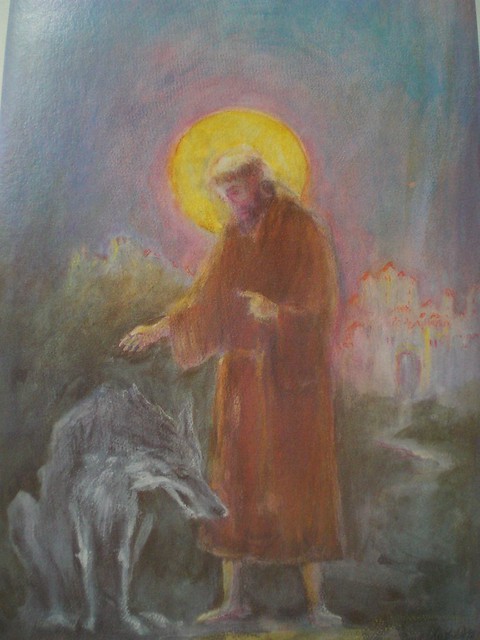
Sept 17
Scripture: John 4: 7-14
7 When a Samaritan woman came to draw water, Jesus said to her, “Give me some water to drink.” 8 His disciples had gone into the town to purchase food. 9 The Samaritan woman said to him, “You are a Jew. How can you ask me, a Samaritan woman,[f] for some water to drink?” (Jews do not share anything in common with Samaritans.) 10 Jesus replied,
“If you recognized the gift of God
and who it is that is asking you for something to drink,
you would have asked him
and he would have given you living water.”
11 “Sir,” the woman said, “you do not have a bucket, and the well is deep.[g] Where can you get this living water? 12 Are you greater than our ancestor Jacob who gave us this well and drank from it himself along with his sons and his cattle?” 13 Jesus said to her,
“Everyone who drinks this water
will be thirsty again.
14 But whoever drinks the water that I will give him
will never be thirsty.
The water that I will give him
will become a spring of water within him
welling up to eternal life.”
Meditation
From his article "Duns Scotus: The Subtle Theology of Love" by Séamus Mulholland OFM
In an age when the earth groans under ecological devastation and countless human lives are dismissed as expendable by insidious systems of power and various forms of devastating conflict, along with political and social upheaval, the medieval Franciscan theologian John Duns Scotus offers profound wisdom that speaks directly to our contemporary crises. Known as the ‘Subtle Doctor’ for the precision of his thought, Scotus was, first and foremost, a Friar Minor, a follower of Francis of Assisi, and his seemingly abstract theological formulations are, in truth, expressions of a spirituality steeped in divine love and radical reverence for all creation.
Born in Scotland in 1266, John Duns Scotus entered the Franciscan Order and became one of the most brilliant thinkers of the Middle Ages. Yet to understand Scotus merely as an academic philosopher is to miss the beating heart of his work. He was a Franciscan through and through, and his theology flows from the same spring that nourished Francis: a profound experience of God’s overwhelming love manifested in creation and supremely in the Incarnation. Every complex argument, every subtle distinction in Scotus’ work serves a deeply spiritual purpose, to articulate how the infinite God draws near to finite creatures, how matter itself becomes the medium of divine encounter, and how each created thing bears irreplaceable dignity.
Scotus’ spirituality was marked by an intense devotion to the person of Christ and to Mary, the Mother of God. His life as a Franciscan friar, dedicated to poverty, prayer, and preaching (and we can most certainly regard his teachings and writings as a form of such) shaped his intellectual pursuits. When he defended the Immaculate Conception at a time when even many devout theologians questioned it, he was not merely solving an academic puzzle but defending the dignity of the humble handmaid whom God exalted. When he developed his concept of haecceitas or ‘thisness’, he was giving philosophical expression to the Franciscan wonder at each particular sparrow, each lily of the field, each human person whom God knows by name.
Perhaps no concept from Scotus’ thought speaks more powerfully to our ecological moment than his doctrine of haecceitas, the ‘principle of individuation’ that makes each thing irreplaceably itself. While other medieval thinkers saw individuals merely as instances of universal categories, Scotus insisted that the uniqueness of each being is fundamental, not accidental. Each creature possesses an irreducible ‘thisness’ that distinguishes it from every other member of its species and makes it absolutely unique before God and the universe.
This philosophical insight carries profound spiritual and practical implications for how we relate to the created world. In our time, when species vanish daily, when ecosystems are reduced to ‘resources’ for exploitation, when the rich tapestry of creation is flattened into economic abstractions, Scotus reminds us that every single being, each songbird, each ancient tree, each flowing stream, possesses an unrepeatable dignity. When a species goes extinct, something absolutely unique is lost forever, never to be recreated. When a forest is cleared, countless individual beings of irreplaceable value are destroyed.
Scotus’ haecceitas proclaims that creation is not a homogeneous mass but a magnificent symphony of unique voices, each one willed into existence by God and known intimately by the divine mind. This theology elevates ecological concern from pragmatic necessity to sacred obligation. We are called to reverence not just ‘nature’ in general, but this particular wetland, this specific whale, this individual person drinking poisoned water. The dignity of all that exists flows from the creative love of God who called each being forth and pronounced it good, not good in general, but good in its irreplaceable particularity.
Musical Selection
Prayer
holy and mighty God for ever and ever. Amen. (ICEL; 1998)