Acta Sanctorum: St. Rose Philippine Duchesne (Nov 18)
November 18, 2026
Fr. John Colacino C.PP.S.

November 18
 

St. Rose Philippine Duchesne


Life (1769-1852)

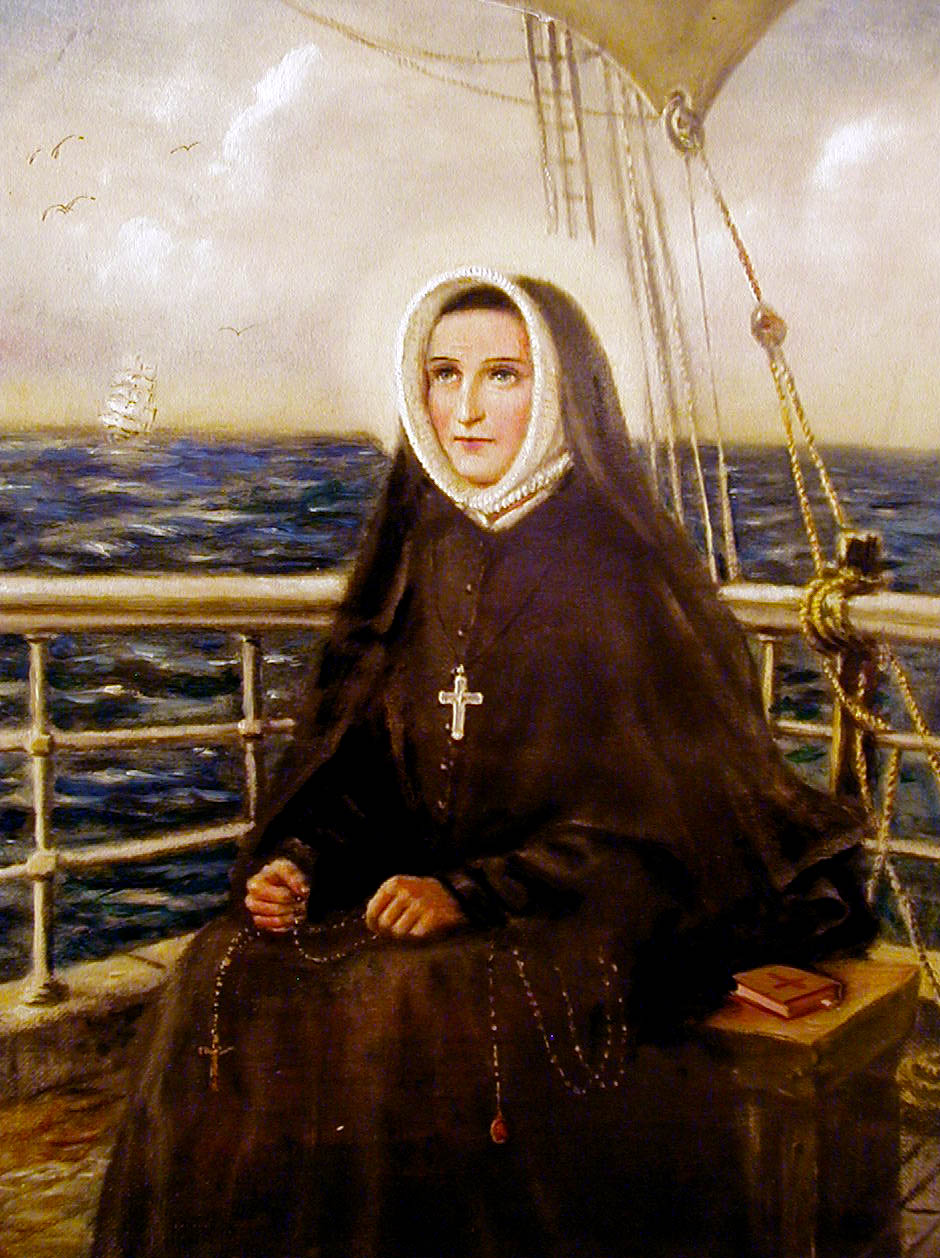
Rose Philippine Duchesne grew up in the midst of the French Revolution and its religious inconveniences. The daughter of a prominent civic leader of Grenoble, she entered the Visitation Order in 1788 despite her father’s objections, but in 1792 she was ousted from the community when the French revolutionary government closed all convents. During the decade that followed, Rose, once more a laywoman willy-nilly, devoted her time to teaching poor children, nursing the sick, and sheltering priests pursued by the government. When the war subsided she gained possession of her former Visitandine Convent, hoping to re-establish it. This proved impossible because the sisters had been so widely scattered. Therefore, in 1804 she and some other women joined a new religious order lately founded by St. Madeleine Sophie Barat, the Religious of the Sacred Heart of Jesus. Rose made her old convent available to Mother Barat, so it was reopened as the second house of the Sacred Heart nuns.

Mother Duchesne soon became a leading figure in the new religious community. In 1815 she was given the task of opening its first Parisian convent. Four years later Mother Barat sent Rose Philippine and four other nuns to establish their first foundation in the New World at St. Charles, Missouri, then in the diocese of New Orleans. At St. Charles, Mother Duchesne opened the first free school west of the Mississippi. In 1819 she built another convent at Florissant, Mo. There she set up a second free parish school, a small orphanage, a school for Indian girls (which did not long survive), and a private boarding academy for girls. Florissant also became the novitiate for the Religious of the Sacred Heart. Gradually groups of nuns went forth to found new convents and schools across the U.S.A., including (1849, 1855) Rochester, New York. In 1827 Mother Rose accepted the invitation to establish a convent school in St. Louis itself. Mother Duchesne’s earliest American years were therefore occupied mostly by administrative tasks. Only in 1840 did she achieve her dream to unshoulder these responsibilities and devote her time to teaching Indian girls. Now aged 71, she was assigned to teach in a school for Potawatomi Indians at Sugar Creek, Kansas. She stayed there only one year, however. Despite her good-will she could not learn the Potawatomi language. But she could and did aid the work by praying for her Indians. The Indians were aware of her devotion, and dubbed her, in praise, “The Woman Who Always Prays”. It was during these last years that Rose reached the spiritual heights of a career that had always been devout.

We must appreciate what a trial was Mother Duchesne’s whole American venture. She arrived in America when already 50 years old, a highly cultured French woman who would always find Americans hard to understand. Her apostolate involved many trials: cold, yellow fever, slanders directed against her schools, disappointment with the Indian women, who were as much addicted to whiskey as the Indian men. But as an almost Franciscan devotee of poverty, she used these frustrations as means to achieve still greater detachment. During her last years her room was a tiny one without creature comforts: one window in which paper replaced the broken panes, a thin mattress laid out nightly on the floor for a bed, one old coarse blanket as a coverlet. While these austerities were private, their result was not. The famous Jesuit missionary, Father Pierre DeSmit, would say at her death, “No greater saint ever died in Missouri, or perhaps in the whole Union.”

As she lay dead in 1852, her nuns had a daguerreotype photo taken of Rose Philippine “in case she may one day be canonized.” Pius XII did declare her “blessed” in 1940, and Pope John Paul II canonized her on July 3, 1988. Her feast day is November 18.  --  Father Robert F. McNamara

Scripture: 2 Corinthians 5:14-17

The love of Christ urges us on, because we are convinced that one has died for all; therefore all have died. And he died for all, so that those who live might live no longer for themselves, but for him who died and was raised for them. From now on, therefore, we regard no one from a human point of view; even though we once knew Christ from a human point of view, we know him no longer in that way. So if anyone is in Christ, there is a new creation: everything old has passed away; see, everything has become new! All this is from God, who reconciled us to himself through Christ, and has given us the ministry of reconciliation.

Writings

(Year A). I  have  decided after  a  Holy  Communion  offered  for  this  intention,  to  leave  you  this  sketch,  for  I  know  only  too  well  how  fearful  and  apprehensive  you  must  feel  in  confiding  to  me this  important  work,  especially  since  we  shall  be  at  such  a  vast  distance  from  those  who  have  given  to  us their spirit;  and  from  you  in  whom  that  spirit  has  been  concentrated  only  that  you  might  share  it  with  all  your daughters.  But  if  God  has  shown  His  Will  in  my  vocation,  if  it  is  He  Who  provides  the  means  to  accomplish it,  then  there  is  reason  to  hope  that  He  will  uphold  His own  work  though  confided  to  those  who  are  weak,  undeserving  and  incapable  of  success. 
 
My  first  admiration  for  the  life  of  the  missionary came  when  I  heard  the  conversation  of  a  good  Jesuit who  had  evangelized  Louisiana  and  who  told  us  stories of  the  Indians.  I  was  then  only  eight  or  ten  years  of age,  yet  I  thought  missionaries  fortunate  and  envied 
them  their  work  without  being  astonished  by  its  dangers, for  at  the  same  time  I  was  reading  the  lives  of  the  martyrs  in  which  I  took  a  keen  interest.  The  good  Jesuit Father  was  extraordinary  confessor  in  the  Convent  in which  I  was  a  pupil;  I  went  several  times  to  Confession to  him,  and  I  loved  his  familiar  and  simple  manner  of speaking — a  manner  he  had  used  with  the  [Indians]. 
 
From  that  time,  the  names  of  Propaganda,  Foreign Missions,  of  priests  destined  for  them,  of  religious  in far-away  lands,  made  my  heart  thrill.  When  at  eighteen  years  of  age  I  was  about  to  enter  religion  the  wish to  take  part  in  the  Apostolate  made  me  choose  the  Visitation  where  children  are  educated  rather  than  the  Order of  Carmel  that  I  loved  much.  My  Community  was animated  by  the  spirit  of  the  Jesuits  from  whose  Costitutions  they  boasted  that  their  own  had  been  drawn. 
 
The  library  was  enriched  with  nearly  all  the  works  of Jesuit  authors,  because  at  the  time  of  the  Suppression, three  who  had  been  members  of  the  Society  of  Jesus were  in  hiding  in  the  house  of  our  chaplain,  and  when they  died  they  left  their  library  to  the  Convent.  During the  entire  two  years  of  my  noviceship  I  read  only Rodriguez  without  ever  tiring  of  it,  and  when  we  assembled  after  Vespers,  I  cited  as  examples  the  Jesuit Saints,  telling  the  stories  of  their  lives  one  after  another. 
 
That  of  St.  Francis  Xavier  touched  me  the  most,  and  in his  life  I  best  loved  the  incidents  of  the  Socoto  holding their  arms  out  to  him  on  the  bank,  his  ardor  in  the  garden  of  Goa,  his  shedding  of  tears  of  consolation  on  the desolate  Islands  of  Moro,  his  crying  out  when  there  was question  of  labor:  “Yet  more,  O  Lord,  yet  more!”  And  finally  his  touching  appeals  to  the  academies  of  Europe to  send  him  missionaries.  How  often  did  I  not  say to  him  in  my  impatience:  “Great  Saint,  why  do  you  not  call  me?  I  should  obey.”  He  is  the  Saint  of  my  heart.  (Letter to St. Madeleine Sophie Barat giving an account of her missionary vocation)
 
Musical Selection
 
 
Some say love, it is a river
That drowns the tender reed
Some say love, it is a razor
That leaves your soul to bleed
Some say love, it is a hunger
An endless aching need
I say love, it is a flower
And you, its only seed
 
It's the heart afraid of breaking
That never learns to dance
It's the dream afraid of waking
That never takes the chance
It's the one who won't be taking
Who cannot seem to give
And the soul, afraid of dying
That never learns to live
 
When the night has been too lonely
And the road has been too long
And you think that love is only
For the lucky and the strong
Just remember in the winter
Far beneath the bitter snows
Lies the seed that with the sun's love
In the spring becomes the rose
 

Collect

Lord God,
Master of our lives,
you led Rose Philippine Duchesne
from the silence of the cloister
to an intense apostolic life.
Through her intercession
enable us to respond to your call
with the same generosity
which she drew from the Heart of Jesus,
your Son, our Lord,
who lives with you and the Holy Spirit,
one God, for ever and ever. Amen.


Archives